When winter hits the Keystone State, Pennsylvanians don their snow boots and crank up the heating. Just like you need protection against the chill, so does your garage door. Freezing temperatures and icy conditions can affect the performance of this crucial system.
Savvy homeowners know the value of preparing before the mercury plummets. Grab a hot cup of cocoa and explore DIY maintenance and troubleshooting tips for winterizing your garage door.
Your garage door often acts as a secure entry point to your home. During the chilly season, it can also let in cold air, icy temperatures, moisture and pests looking for warmth. Follow these eight tips to get your door winter-ready:
Effective maintenance starts with a comprehensive inspection. Check your garage door and its components before winter starts to identify any wear, damage or potential issues.
Look for:
Tracks and rollers are responsible for the smooth movement of your garage door. Dirt, grime or winter ice buildup can obstruct the rollers. Clean the tracks by vacuuming up debris, then following up with a damp cloth or small brush.
The smallest parts of your garage door often work the hardest. Moving metal components, like hinges or rollers, need lubrication to perform their best. It reduces friction, protects against rust and prevents premature wear. Use a silicone-based lubricant instead of grease, which can harden in cold temperatures.
Apply lubricant to the following moving parts:
Insulation is your secret weapon in the battle against winter chill. A well-insulated garage door stops heat from escaping, stabilizing indoor temperatures.
If your door already has insulation, check it for wear or damage. For uninsulated doors, you can buy a DIY insulation kit or install a new, insulated garage door. R-value is the golden measurement for insulation. It tells you how well an insulating material can resist heat transfer — a higher number means better thermal performance.
Like insulation, weatherstripping helps to defend your garage door against the elements. It forms a watertight seal around the door’s perimeter. Damaged weatherstripping can allow drafts and moisture into the garage.
Check the seals at the bottom, top and sides of your garage door — compromised seals will need replacement. Replacing weatherstripping involves:
While it seems easy, effective weatherstripping replacement is time and labor-heavy. Professional garage door experts can simplify the process. They often include weatherstripping inspections and replacement as part of scheduled maintenance.
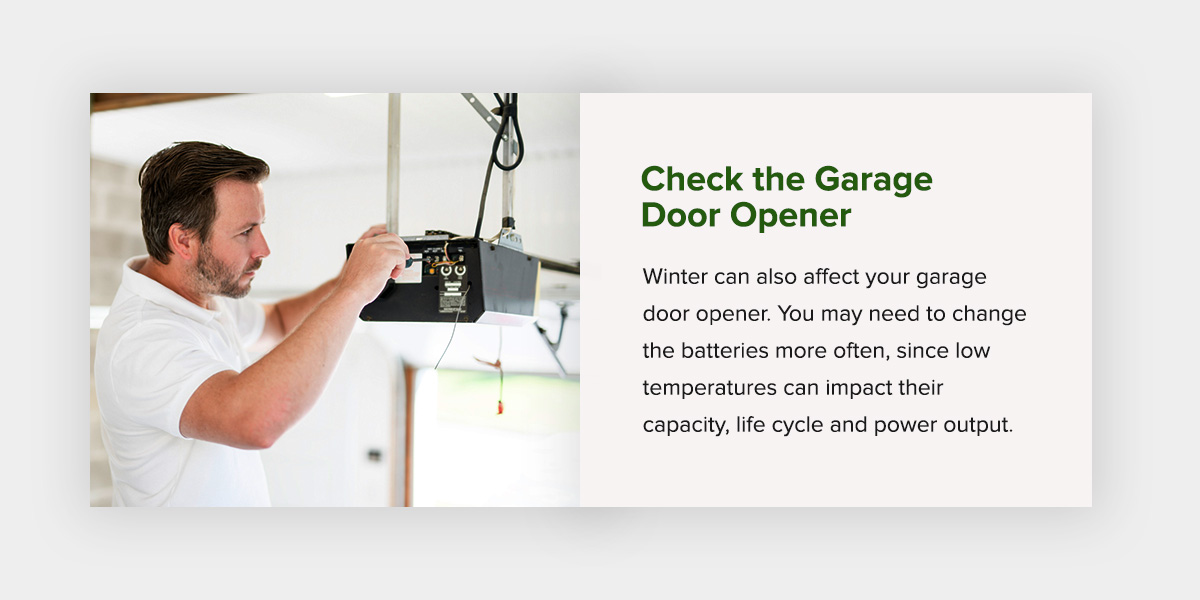
Winter can also affect your garage door opener. You may need to change the batteries more often, since low temperatures can impact their capacity, life cycle and power output. If cold air enters the opener housing, it can affect motor performance. Inspect the housing for cracks or condensation.
A faulty garage door opener may need professional repair or complete replacement.
Safety sensors are the guardian angels of your garage door. They detect obstructions, stopping the door from closing on people, pets or objects. You can find these “eyes” on either side of the door, near the bottom of the frame.
Keep the sensors clean by wiping them with a soft cloth. Check their alignment by looking for a steady light on either receiver — a blinking light signals a problem. You can adjust misaligned sensors yourself or contact a professional for help.
All the parts of your garage door work together to hold its weight. Even weight distribution, or balancing, is crucial for safe and efficient operation. An unbalanced door could crash shut without warning, causing a serious safety risk to people, pets and vehicles.
Perform this DIY test to check the garage door balance:
Unbalanced garage doors require professional service from a trained technician.
When the cold weather sets in, the last thing any homeowner wants is a stuck garage door. Here are some solutions to cold-weather garage door problems:
You arrive home on a chilly day to find your garage door frozen shut.
Freezing conditions can cause your garage door to operate slowly or not at all.
Springs and cables are vital parts of your garage door system. When these fail, your door becomes inoperable.
Winterizing your garage door can save you time, money and headaches. The benefits include:
An insulated garage door can help cut your energy costs. It reduces heat transfer, which can ease the burden on your heating system during winter. Adding insulation to your home can save you up to 10% on your annual energy bills.
Weatherproofing your garage door stabilizes temperatures in the garage and connected spaces. You enjoy a cozier, more comfortable home.
Weatherproofing your door can save you from expensive winter garage door repairs. Regular maintenance can help identify and resolve small issues before they escalate into major problems. Inspections, cleaning and lubrication care for its components, while preventing wear.
This proactive approach can also extend the life of your garage door, avoiding the need for a total replacement.
Your garage houses everything from vehicles to tools to gym equipment. An insulated, sealed garage door helps safeguard belongings from moisture and cold winter air.
Many garages have water pipes running through the walls. Pennsylvania’s icy winters put these pipes at risk of freezing or bursting. Your garage door contributes to a stable indoor temperature, which can help prevent frozen pipes.
Get your garage door ready for winter with trusted service from Drake Reed Door Co. For over 50 years, we’ve cared for garage doors across Central Pennsylvania. We understand the unique challenges of PA winters. Our experienced technicians deliver expert installation, preventive maintenance and responsive garage door repairs.
Looking for an energy-efficient upgrade? Visit our showroom to view our range of residential garage doors from leading brands, such as Amarr.
Enjoy better garage door performance through every season. Call us at 717-266-2698 or schedule a service online today.